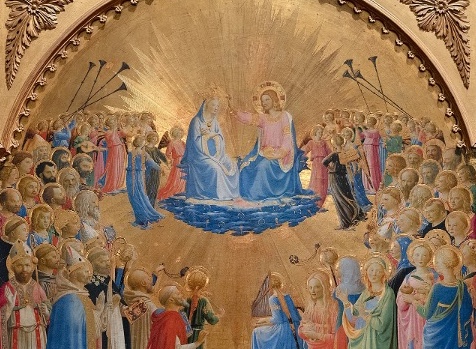
As I drew nearer to the end of all desire,
I brought my longing’s ardor to a final height,
Just as I ought. My vision, becoming pure,
Entered more and more the beam of that high light
That shines on its own truth. From then, my seeing
Became too large for speech, which fails at a sight
Beyond all boundaries, at memory’s undoing—
As when the dreamer sees and after the dream
The passion endures, imprinted on his being
Though he can’t recall the rest. I am the same:
Inside my heart, although my vision is almost
Entirely faded, droplets of its sweetness come
The way the sun dissolves the snow’s crust—
The way, in the wind that stirred the light leaves,
The oracle that the Sibyl wrote was lost.
—Dante Alighieri, Paradiso, Canto XXXIII
What touches me in these words is the distinction between an experience and what remains of it. Dante describes something too great for speech, something even memory cannot fully preserve. Yet its sweetness endures. Reading this, I am reminded of moments in my own life that I cannot adequately explain, but whose quality I still recognise.
The words I would use for that quality now are divine love. I do not mean simply a stronger version of the love we ordinarily feel. I mean moments when love seems to belong to another order of experience, beyond my preferences and the contradictions of my usual emotions.
For me, the remarkable thing is how consistent these moments have been. I can recall something of this quality at the age of five, at ten, at eighteen, and perhaps even in impressions from before I could speak. The circumstances were different, and the experience came in varying degrees, but its flavour was recognisably the same.
I would not have called it divine love as a child. Those words and ideas came later. Looking back, however, I recognise a continuity that does not seem to depend on what I understood at the time. So much about me has changed—my interests, my relationships, my understanding of life—yet something in these moments appears untouched by those changes.
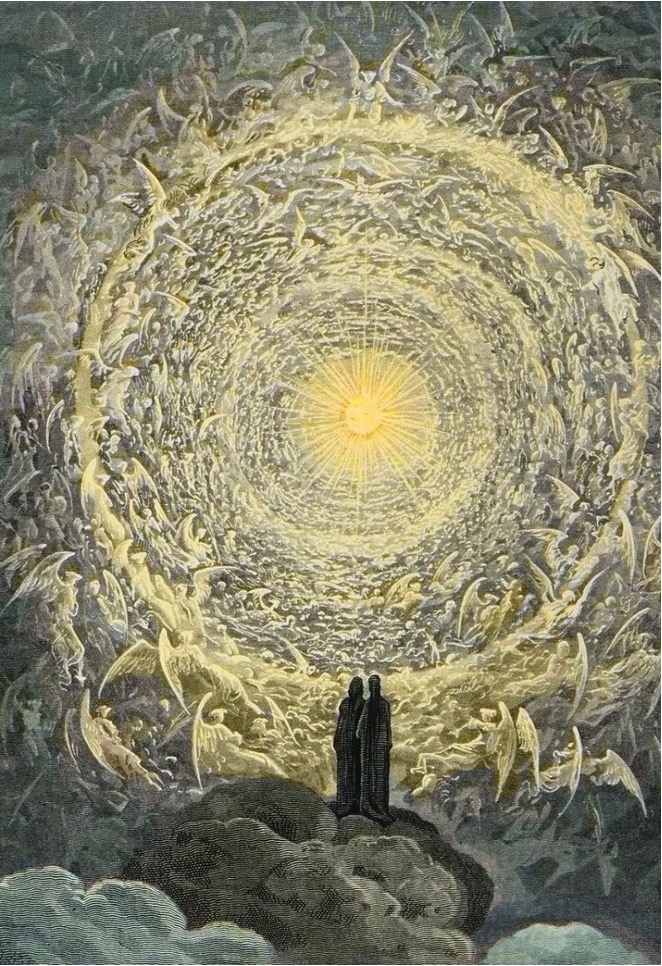
I feel the subject must begin with experience rather than theory. We can discuss higher love, define it, and distinguish it from other kinds of feeling, but none of this quite reaches the experience itself. The most I can offer is a personal testimonial in the hope that it touches a recognition in someone else.
Perhaps we can each recall a moment of being overtaken or absorbed by a higher power, when the past, the present, and the concerns of everyday life seemed inwardly resolved. I do not mean that every practical problem disappeared. There may still have been a difficult conversation to have or a responsibility to fulfil. But for a moment, those things no longer occupied the whole of our attention. They were held within something larger.
Even the distinction between what we normally count as loved and unloved can lose its force. Something we had resisted may no longer feel excluded. We have not worked through every contradiction separately; we find ourselves in a state in which those contradictions no longer divide us in the same way.
This helps me understand the difference between human love and what I am calling divine or objective love. Human love usually has a particular focus: a person, a place, a shared history. Its tenderness and generosity are real. So, often, are the expectations that accompany it—the wish to be understood, the fear of loss, or the need to be loved in return.
Divine love seems less dependent on these conditions. In the moments I recognise, it does not wait for circumstances to suit me. Nor does it seem to arise from my judgement that someone or something deserves to be loved. There is a freedom from personal preference that makes the experience feel quite different from my ordinary emotions.
This raises an interesting question about effort. Much of what I understand the Fourth Way to be concerned with is the work of raising our level of being. That is, becoming more present and less governed by habitual reactions and associations. Through this work, we hope to become receptive to something beyond our ordinary experience.
Yet some of the moments I remember most clearly arrived without any apparent effort on my part. I had not reasoned my way towards them or deliberately brought them into being. The love was simply there, and I found myself partaking in it.
At such a moment, perhaps even the Fourth Way needs to step aside. By this, I mean the system–as something we are thinking about or trying to apply. The work has not become irrelevant, but its ideas need no longer stand between us and the experience they have helped us approach.
There is a time to make an effort, and there is a time to let go of the person who is making it. The wish to analyse the state, compare it with another experience, or regard it as evidence of our progress can bring our personal associations back into the foreground. What is asked of us then may be much simpler: to remain present and allow the experience to be what it is.
From this angle, a person’s level of being might be understood through their capacity to receive divine love. I would not make this a matter of counting extraordinary moments. Their unexpected appearance, including in childhood, suggests that they cannot simply be treated as rewards for effort. But there may be a difference between receiving a brief glimpse and becoming more available to that quality in our lives.
How much room do we allow it? How quickly do our associations interrupt it? And can something of its quality enter the way we meet another person?
For me, these questions have become more meaningful through being part of a school. My first meeting with the teacher of our school belongs among the moments in which I recognised this love. Contact with the teacher has continued to bring moments of the same flavour. What matters to me is not only their intensity, but that sense of encountering something consistent.
The journey within a school has also made such moments more frequently available. Alongside our individual efforts is the possibility of helping and being helped by other students. Here, the relationship between human and divine love becomes practical rather than theoretical.
Helping another person can ask us to put aside our own preoccupations. Accepting help can ask us to let go of the idea that we must accomplish everything alone. In either direction, something can open that is less concerned with ourselves.
This is why I do not see human love as something to leave behind. Friendship, care, and shared work give us opportunities to express whatever understanding we have received. Perhaps a higher love allows us to enter these relationships more fully, with fewer demands and less need to make another person responsible for our happiness.
Looking back, the qualities that seem most distinctive in these moments are their consistency, their freedom from my usual contradictions, and their reach beyond the personal. Although the experience takes place within an individual life, it does not feel as though it belongs only to that life.
Perhaps this is why poetry and art can communicate something that explanation cannot. We encounter words or images made by someone whose circumstances were entirely different from ours, and something in us recognises their quality. We may not know exactly what that person experienced. Yet their expression can bring us closer to something we have known ourselves.
Dante’s words do this for me. They remind me that an experience can pass beyond our ability to recall it and still leave something living in us. We may lose the details while retaining a sweetness that helps us recognise the same quality when it comes again.
And in Shakespeare’s Sonnet 116, I hear a related recognition: a love whose nature is not altered by the changes around it. This is what moves me when I consider those moments across my own life. I have changed, and my understanding has changed, but the flavour of that love has remained remarkably constant.
Perhaps our work is to become more available to it—and, when it is given, to receive it without trying to make it our possession.
Sonnet 116
William Shakespeare
Let me not to the marriage of true minds
Admit impediments. Love is not love
Which alters when it alteration finds
Or bends with the remover to remove.
O, no, it is an ever-fixèd mark
That looks on tempests and is never shaken;
It is the star to every wand’ring bark,
Whose worth’s unknown, although his height be taken.
Love’s not Time’s fool, though rosy lips and cheeks
Within his bending sickle’s compass come;
Love alters not with his brief hours and weeks,
But bears it out even to the edge of doom.
If this be error, and upon me proved,
I never writ, nor no man ever loved.
Walter Scott lives in Edinburgh, Scotland, and has studied the Fourth Way with others for several decades.
For more articles by Walter, see: https://fourthwaytoday.org/author/walter-scott/ .