“By observing himself, a man notices that self-observation itself brings about certain changes in his inner processes. By observing himself he throws, as it were, a ray of light onto his inner processes which have hitherto worked in complete darkness.” — Gurdjieff, In Search of the Miraculous
Interestingly, this mirrors a truth found in quantum mechanics: that to observe is to change. The very act of seeing reshapes what we see. It is a quiet echo of the ancient adage, “As above, so below,” or “As within, so without.”— The mystery of the stars, the sun, and the moon reflected in the soul.
The Chinese text, I Ching「易经」, commonly translated as The Book of Changes, refers to the changes of yin and yang. The sun and moon symbolically represent these changes.
“Sun and Moon make change.” 「日月為易。」 — Wei Boyang, Triplex Unity (2nd c. Taoist text)
“Change「易」means the sun「日」and moon「月」.” — Yuyan, Commentary on Triplex Unity
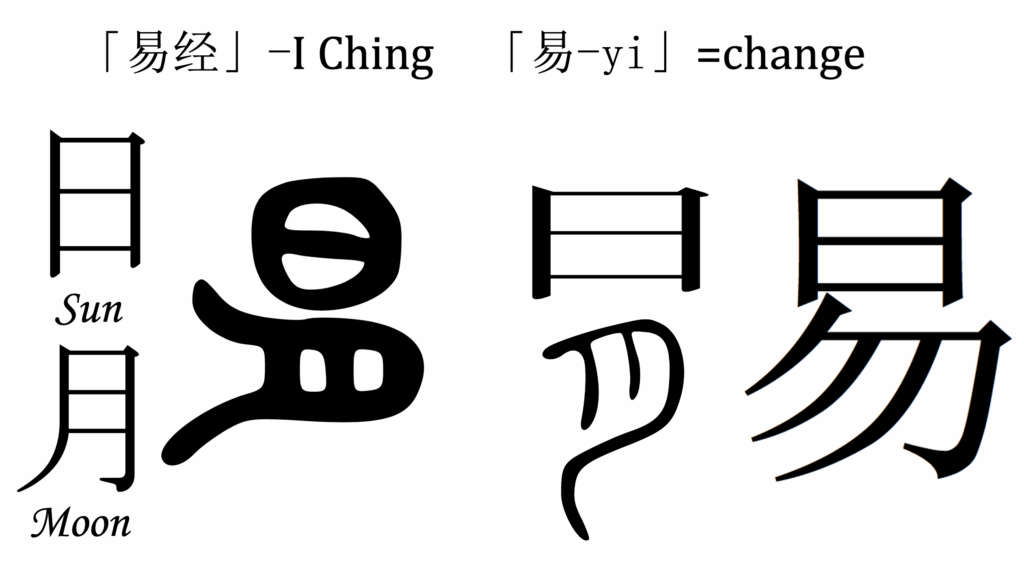
The character for change「易」is made up of the sun「日」above and moon「月」below. (Even though the shape of moon’s character 「勿」is different, it still refers to the moon.)
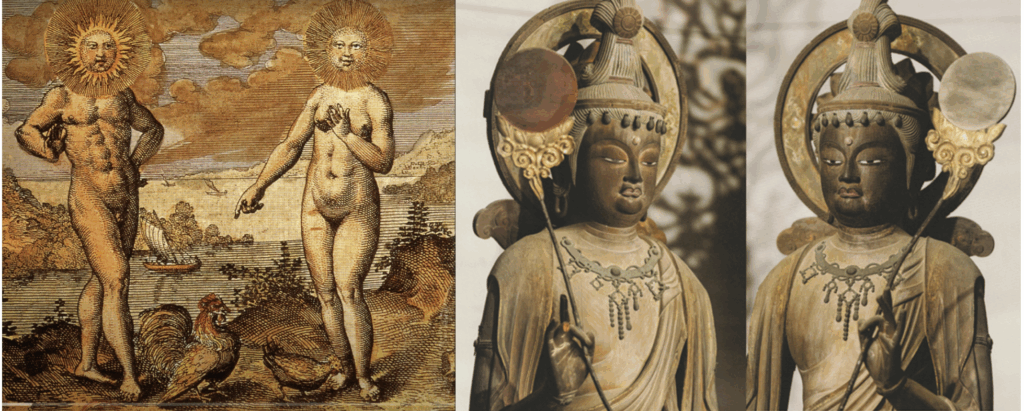
The Sun and Moon, Michael Maier, Atalanta Fugiens —
Nikko and Gekko Bosatsu, the Bodhisattvas of the Sun and Moon, Daigoji temple, Kyoto
“I have inside me the sun, the moon, God. I am—all life in its totality.”
– Gurdjieff, Views of the Real world
The moon is originally dark. By borrowing the light of the sun it gradually becomes full. Becoming conscious is symbolized by creating a “full moon” in oneself.
“You must create your own moon.” – Gurdjieff
“The human body is pure yin, with no yang, just as the moon has no light of its own; it must borrow the gift of another before it can produce the elixir, just as the moon borrows the light of the sun.”
— Liu Yiming, Commentary on Hexagram #61, Faithfulness in the Center
One meaning of ‘borrowing the gift of another’ is to learn we need to know how to create a full moon in ourselves. We must learn how to become self-aware—and most importantly, how to sustain that awareness. When we lose the thread of self-awareness, we may not realize it until later. That moment may come a minute later, an hour later, or even a day later. One also must see one’s lower self and understand that, aside from a small part, it has no real interest in self-awareness. It follows its own aims, driven by its own concerns.
The second meaning is one’s inner moon trying to imitate the awareness of one’s inner sun.
“The changes「易」are the images:
The suspended images illuminate「明」 clearly;
None are greater than the sun and moon.'”
— Wei Boyang
The character「明-ming」, meaning ‘illumination,’ also combines the sun 「日」and the moon 「月」, but here they are next to each other. Because ‘明-ming’ also has the meaning of ‘understanding,’ we know it refers to what Gurdjieff called a ‘ray of light,’ shining into one’s inner processes.
While the character for change 「易-yi」, reflects the cycling of the light and darkness of the sun and moon,「明-ming」suggests their harmonious presence—shining together as one. The sun symbolizes the Higher Self. When it radiates fully within, one experiences spontaneous and effortless self-awareness. On rare and profound occasions, this inner radiance becomes so intense that it surpasses even the brightness of external light. In such moments, one’s peripheral vision may blur, as if the external world itself yields to a greater clarity from within. Both the Bible and the I Ching speak to this phenomenon.
“If thine eye be single, thy whole body shall be full of light.”
— Matthew 6:22
“White light appears in the empty room; spiritual illumination comes of itself.”
— Liu Yiming, Commentary on Hexagram 64, Settled
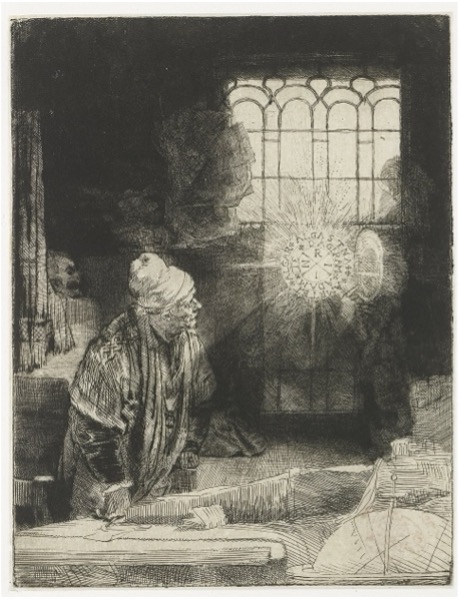
Scholar in his Study, Rembrandt, Rijksmuseum, Amsterdam
In this context, ‘room’ carries a symbolic meaning.
“Certain teachings compare man to a house of four rooms. Man lives in one room, the smallest and poorest of all, and … does not suspect the existence of the other rooms which are full of treasures. The fourth room gives man immortality and all religious teachings strive to show the way to it.” — Gurdjieff, In Search of the Miraculous
“Though yang energy is obtained in a “room,” this does not mean an actual bedroom, but rather the ‘room’ of the body.” — Liu Yiming, Commentary on Understanding Reality
Yang can have many meanings; however, its most essential meaning is light. Taoist texts speak of the yang light of awareness that can symbolically burn away a person’s yin energy, the energy of the lower self. The Chinese character for yang「陽」also contains the sun and the moon. The right-hand component 「昜」resembles the character for ‘change’「易」, but there is a key difference. The horizontal stroke (一) that separates them is also as the character for ‘one’ 「一」. This symbolizes the unity of the sun and moon.
“The sun hides inside the bright moon.”
– Shui-Ching Tzu, Commentary on Cultivating Stillness
In a normal state, however, a person’s mind is like the new moon. It has no inner light. When one’s steward wakes up, it tries to imitate the awareness of one’s Higher Self by creating a full moon. Creating a full moon in oneself is a step-by-step process requiring knowledge, effort, practice, consistency, and firmness.
“Heaven and earth have their new moon and full moon;
man’s body also has its new moon and full moon.”
— Yuyan, Commentary on Triplex Unity
“The path of pervasive illumination is not possible without a constant mind. Constancy means single-mindedly applying the will, the longer the stronger, not becoming lazy and slacking off.”
— Liu Yiming, Commentary on Hexagram #30 Fire
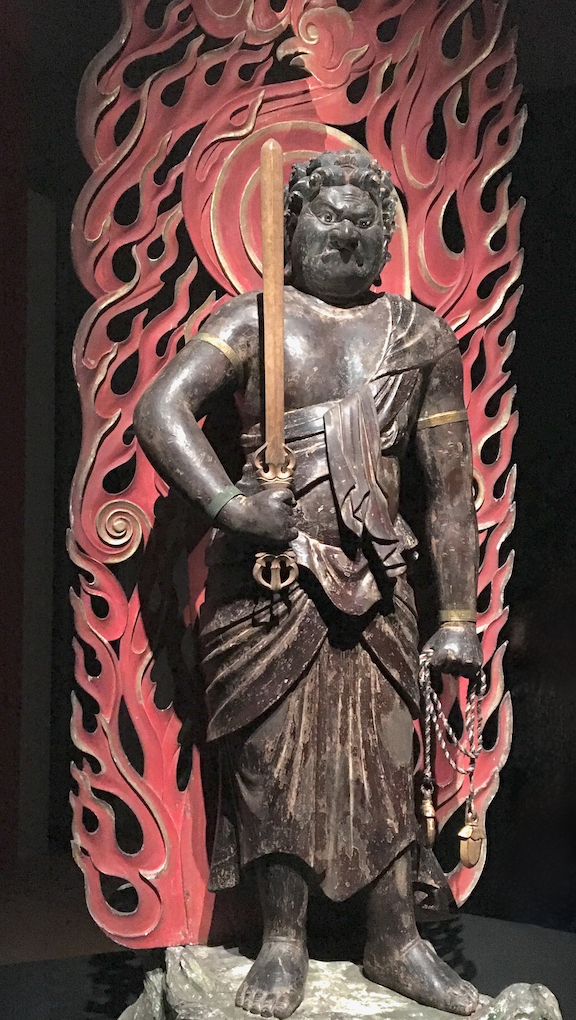
Fudo Myo, the Immovable God of Light, with single-minded will, reaching pervasive illumination,
by Unkei, 12th c., Japan
“When the light can illumine「明」the four directions, so that it reaches everywhere without becoming defective anywhere, the work of clarifying the quality of illumination is complete.” — Liu Yiming, Commentary on hexagram #30, Fire
“Can you illumine「明」the four directions, without using your mind?”
— Tao the Ching #10
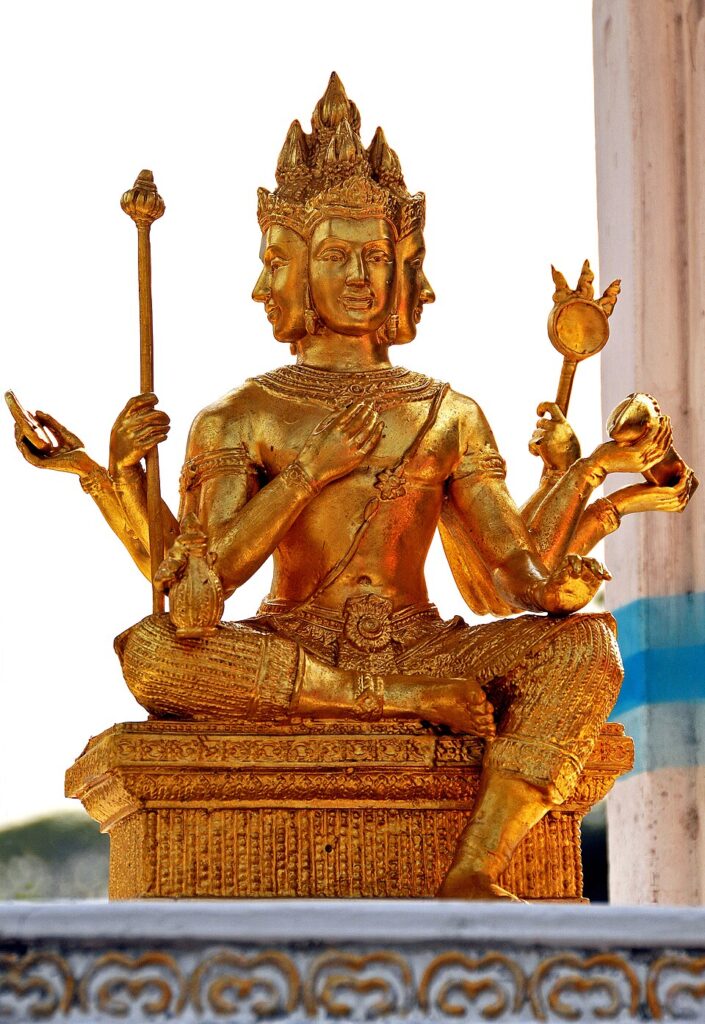
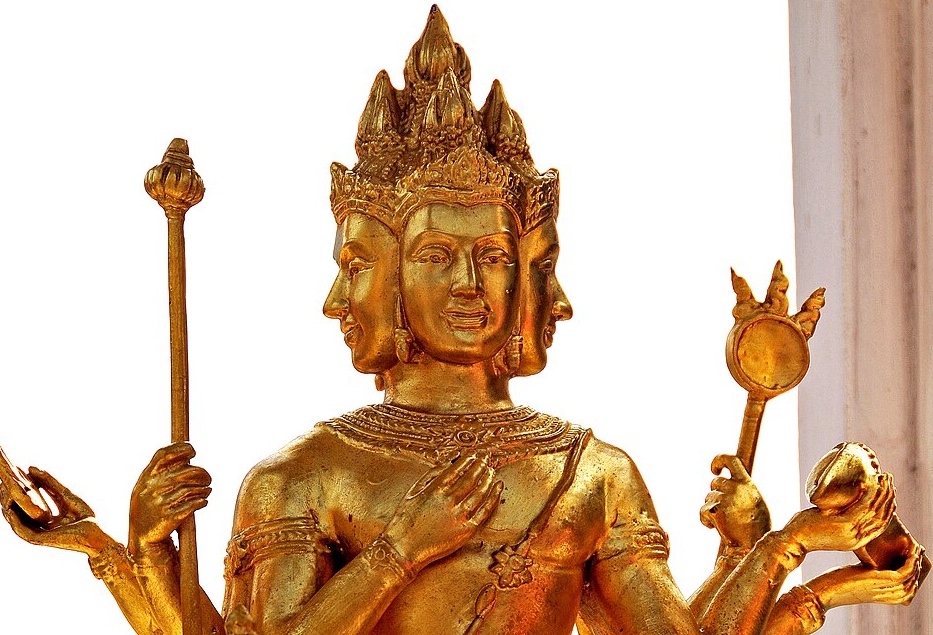
Four Faces of Buddha (Brahma), picture by Dennis G. Jarvis, at a Shrine in Chiang Mai, Thailand
Walther Sell has been a student of the Fourth Way for decades. He is the author of a website on Oriental esoteric teachings, Inner Journey to the West. See other articles by Walther for the FourthWayToday.org: Walter Sell articles.